Answer
“As Chief Engineer, I can motivate juniors using Maslow’s theory. First I ensure their basic welfare and rest, then a safe working environment, then make them feel part of the team. After that I provide recognition and responsibility, and finally opportunities for learning, promotion and professional growth. A junior whose lower-level needs are not satisfied cannot be effectively motivated only by giving more responsibility.”
Maslow says human needs generally progress from lower/basic needs to higher-level needs. As Chief Engineer, I should understand which level is affecting a junior and motivate accordingly.
- Physiological needs – food, sleep, rest, accommodation, reasonable working hours.
CE action: Ensure proper rest, meals, drinking water, ventilation, and compliance with work/rest hours. - Safety needs – personal safety, job security, safe working conditions.
CE action: Provide PPE, proper procedures, toolbox talks, risk assessment, training, and never pressure juniors into unsafe work. - Social / belonging needs – feeling part of the team.
CE action: Maintain good teamwork, involve juniors in meetings, avoid discrimination, encourage communication, and create a supportive engine-room culture. - Esteem needs – recognition, respect, responsibility, confidence.
CE action: Appreciate good performance, give constructive feedback, delegate responsibility, and recognize achievement. - Self-actualization – achieving full potential, learning, promotion, career growth.
CE action: Provide mentoring, technical training, troubleshooting opportunities, encourage higher certificates and promotion, and gradually give more challenging jobs.
Maslow’s Hierarchy of Needs is a motivational theory in psychology proposing that human needs are arranged in a five-tier pyramid. Individuals must satisfy lower-level basic needs before progressing to higher-level growth needs.
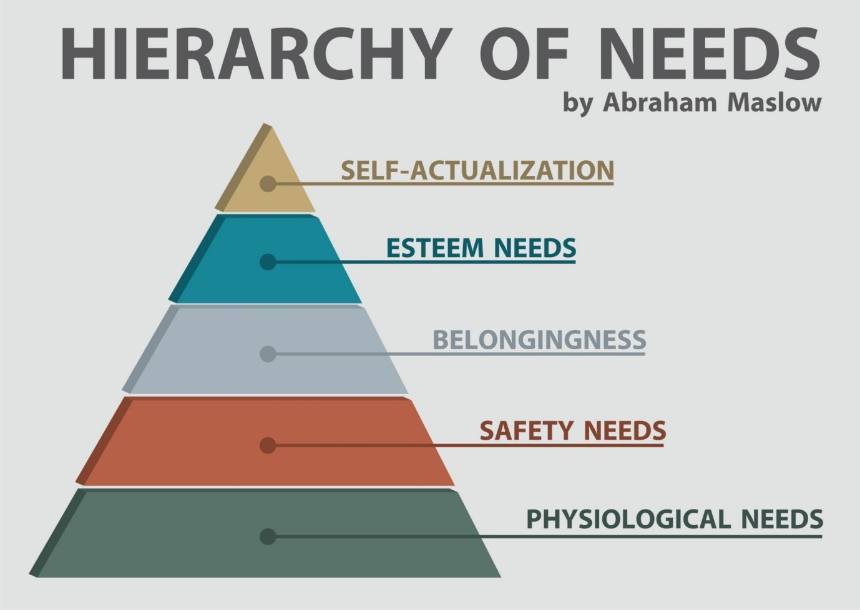
The 5 Tiers of Needs
- Physiological Needs: Basic biological requirements for human survival—air, food, fresh water, adequate sleep, and shelter.
- Safety & Security Needs: Protection from physical harm, job security, health and well-being, financial stability, and a structured environment.
- Social / Belongingness Needs: Emotional relationships including camaraderie, acceptance, teamwork, and communication with family/friends.
- Esteem Needs: Self-respect, recognition, status, appreciation from peers/superiors, and a sense of achievement.
- Self-Actualization: Realizing personal potential, self-fulfillment, mastering complex skills, and personal growth.