Answer
Under the IMO Ballast Water Management (BWM) Convention and the mandatory BWMS Code (Resolution MEPC.300(72)), the definition of viable organisms is critical for evaluating compliance with the Regulation D-2 discharge performance standard.
Official IMO Definition
"Viable organisms" means organisms that have the ability to successfully generate new individuals in order to reproduce the species.
Core Distinction: Living vs. Viable
The BWM Convention regulates viability rather than strict mortality:
- Live/Living: An organism that shows metabolic activity or movement, even if it has been rendered permanently sterile or incapable of reproduction.
- Viable: An organism capable of living and reproducing. If a Ballast Water Management System (BWMS) destroys an organism's reproductive capability (e.g., via UV radiation altering cellular DNA), the organism is classified as non-viable, satisfying the D-2 standard even if it remains technically "alive" immediately after treatment.
Application in Regulation D-2 Standards
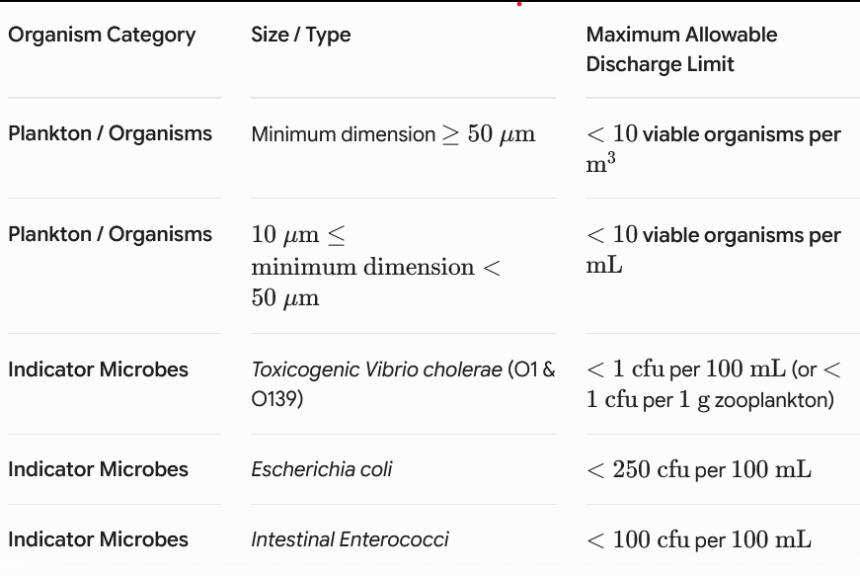
Regulation D-2 sets strict limits on the maximum allowable concentration of viable organisms discharged in treated ballast water: