Answer
A digital twin is a dynamic, highly accurate virtual representation of a physical object, process, system, or asset. Unlike a static 3D model, a digital twin continuously updates itself in real time using operational data gathered from physical sensors, Internet of Things (IoT) devices, and operational software.
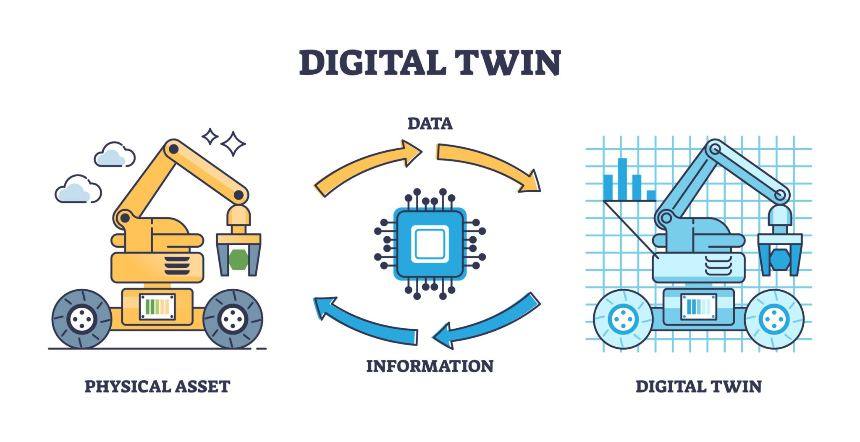
A digital twin operates on a continuous feedback loop consisting of three core elements:
Physical Asset: The tangible equipment, engine, building, or process fitted with IoT sensors that capture variables like pressure, temperature, vibration, and speed.
Real-Time Data Transmission: Network protocols transmit operational sensor data directly to the virtual model.
Virtual Model & Analytics: Advanced algorithms, physics engines, and AI process the incoming telemetry to replicate performance, run simulations, and predict future behavior.
| Application | Primary Function | Example |
| Predictive Maintenance | Forecasts mechanical failures before they happen by detecting abnormal vibration or thermal anomalies. | Monitoring marine main engines or wind turbines to schedule maintenance before breakdown. |
| Real-Time Optimization | Simulates variable adjustments to find peak efficiency without risking physical machinery. | Adjusting power distribution or fuel injection parameters virtually to reduce consumption. |
| Lifecycle & Design Design Testing | Tests stress scenarios and modifications digitally prior to physical construction or overhaul. | Running crash simulations on automobile chassis designs or stress testing ship hull structures. |