Answer
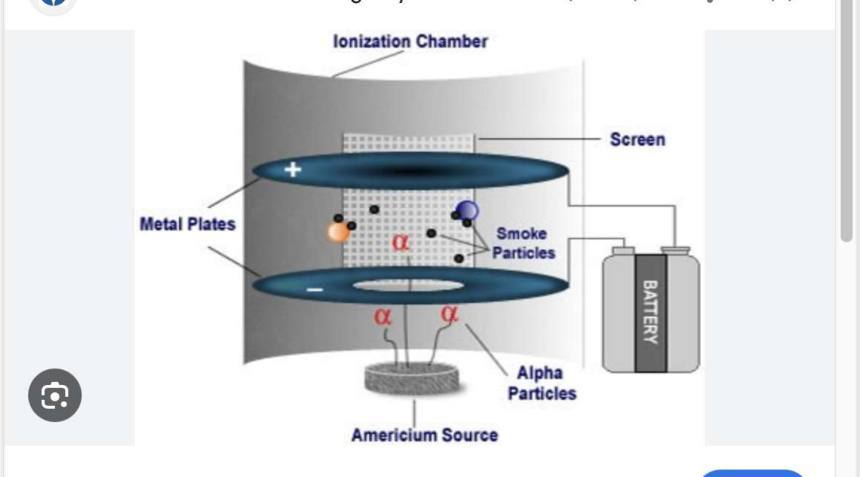
Ionization type fire detectors are desig they work:
ned to detect fires by sensing the presence of sm moke particles. Here's how
Components:
1.Ionization Chamber: Contains a small amount of radioactive material (usually Americium-241) that ionizes the air within the chamber.
2.Electrodes: Create an electric circuit within the ionization chamber.
3.Battery/Power Supply: Provides the necessary power for the detector.
Working Principle:
1.Ionization Process:
◦ The radioactive material emits alpha particles, which ionize the air molecules in the chamber.
◦ This ionization process creates positively charged ions and free electrons.
◦ The positive ions and electrons are attracted to opposite electrodes, creating a small, steady
electric current.
2.Detection Mechanism:
◦ When smoke enters the ionization chamber, the smoke particles attach to the ions.
◦ This attachment disrupts the flow of ions, reducing the current flow between the electrodes.
3.Alarm Activation:
◦ The detector's circuitry continuously monitors the current.
◦ When the current drops below a predetermined threshold due to the presence of smoke, the
detector triggers an alarm.
Advantages:
Sensitivity to Fast-Flaming Fires: Ionization detectors are particularly effective at detecting fast-flaming fires, which produce smaller, less visible smoke particles.
Cost-Effective: Generally, ionization detectors are less expensive compared to other types of smoke detectors.
Safety Note:
• Radioactive Material: Although the amount of radioactive material is minimal and safe for home use, it is important to dispose of ionization detectors properly according to local regulations to avoid environmental contamination.