Answer
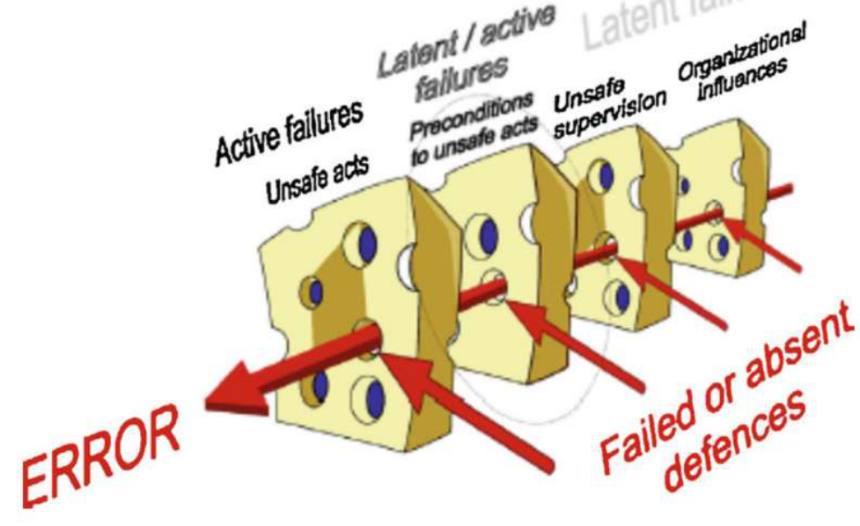
Active failures (level 1):Unsafe acts that t cab be linked directly to an accident.
e.g in case of collision “navigational erro or”
Latent failures: includes the contributor ry factors that may lie dormant for days, weeks o or months
until they contribute to the accident.
Level 2: Preconditions for unsafe acts: divided into three categories
1). Environmental factors
2). Condition of operators.
3). Personnel factors.
Level 3: Unsafe supervision: Divided into o 4 categories.
1)Inadequate supervision (not pro oper guidance, training, leadership, over sight or r incentives to ensure safe & efficient jobs)
2)Plan inappropriate operations(Allowed during emergencies but not in no ormal operations. (e.g. Risk
management, operational temp po.)
3)Fail to correct known problem ms. (Deficiencies are known but not reported o or not taken any Corrective action.)
4)Supervisory violations (existing rules and regulations are willfully disregarded by supervisor)
Level 4: Organization influences: Divided d into three categories.
1). Resource management (human resources, monetary/Budget resources, equipment/facility recourse)
2). Organizational climate: working atmosphere within org.(eg politics, culture, structure)
3). Operational policies refer to organizational rules that governs every day activities. (o operations, procedures, over sight).
5 WHY technique:/ which rca method i is commonly used onboard?
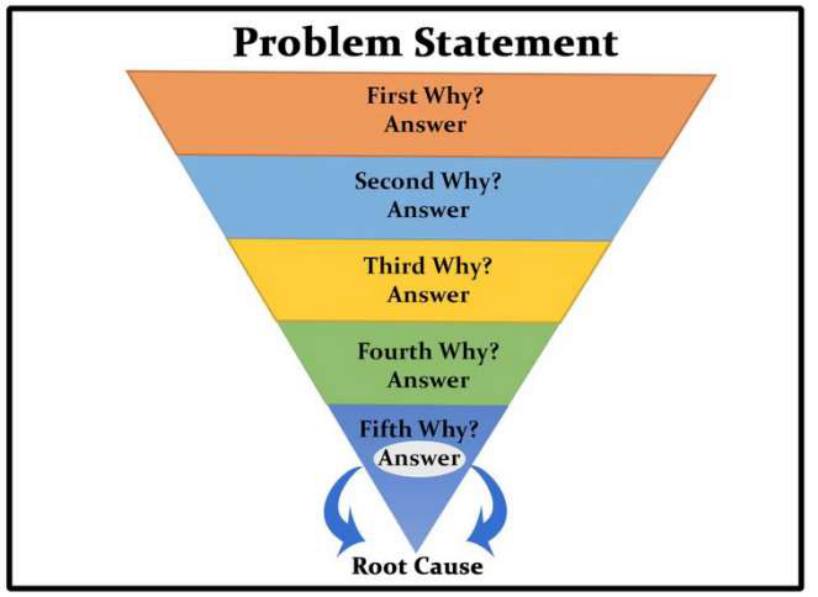
Simplest RCA process
The process involves asking why? At least five times or until the quesn is no longer answeried
An example: An oiler suffered a hand injury while lifting a heavy piece of machinery with chain block
1). Why: The machinery swung suddenly and caught his hand.
2). Why: The ship took unanticipated rolling and oiler could not prevent the machinery swing ongoing.
3). Why: He was working alone
4). Why: There has been no risk assessment or tool box meeting carried out prior work undertaken.
5). Why: procedures were well Documented but ignored.