Answer
A hydrogen fuel cell is an electrochemical power-generating device which combines hydrogen and oxygen to produce electricity, water and heat without conventional combustion.
2H2+O2→2H2O+Electricity+Heat
PEMFC – Proton Exchange Membrane Fuel Cell shown bellow. This is one of types of hydrogen fuel cell.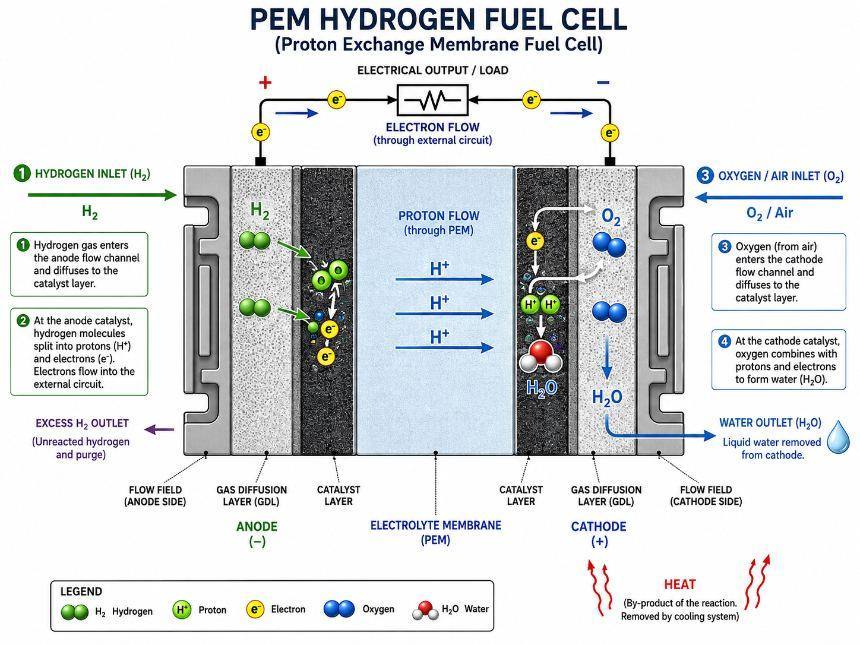
hydrogen cell/fuel cell is not a battery. A battery stores energy internally, whereas a fuel cell keeps producing electricity as long as hydrogen and oxygen are continuously supplied.
Advantages of hydrogen fuel cells
- Zero CO₂ at point of use when pure hydrogen is used.
- No SOx and virtually no particulate matter, because there is no conventional combustion.
- Very low NOx, especially with low-temperature fuel cells such as PEM fuel cells.
- Higher efficiency than combustion engines, particularly at part load.
- Quiet operation with very low vibration because there are few moving parts.
- Good part-load efficiency, suitable for variable shipboard electrical demand.
- Modular design — fuel-cell stacks can be added according to required power.
- Can be integrated with battery-hybrid propulsion, improving overall efficiency and transient response.
- Reduced machinery maintenance compared with reciprocating engines because there are fewer rotating and rubbing components.
- Useful for auxiliary power, hotel loads and short-sea/zero-emission operation.
- If hydrogen is produced from renewable electricity, i.e. green hydrogen, it can provide very low well-to-wake GHG emissions
Main additional benefit over hydrogen combustion
In a hydrogen IC engine, hydrogen is burned, so high combustion temperatures can still produce NOx.
In a fuel cell, there is no flame combustion, so NOx formation is extremely low.